Thursday, 16 May 2013

Investors Target Properties in Central London

The hike in demand for houses and apartments to rent in central London has sparked a flurry of activity among investors looking to capitalise on the booming rental market by purchasing residential properties in the capital with a view to letting them out.


Fresh figures from the Council of Mortgage Lenders (CML) reveal that gross mortgage lending of £4.2 billion across 33,500 mortgages was advanced to buy-to-let landlords in the first quarter of 2013, up from £3.7 billion in the same quarter of last year.

Nearly half of this lending was for remortgage, rather than house purchase, which suggests that many existing landlords are seeking to add to their buy-to-let portfolios.

Paul Smee, Director General of the CML, commented: "The buy-to-let mortgage market is performing well, against a backdrop of robust landlord - and tenant - demand for good quality rental property. Loan performance compares favourably with the owner-occupier sector, and buy-to-let continues to grow as a proportion of the overall mortgage market."

Buy-to-let lending accounted for 13.4 per cent of total outstanding mortgage lending in the UK at the end of March - up from 13 per cent the previous quarter and 12.9 per cent at the end of the first quarter of 2012.

According to EA Shaw estate agency, a lot of this money is finding its way into the housing market in prime parts of the capital, reflected by a rise in the number of investors actively searching for houses and apartments for sale in central London.


Lisa Hollands, Managing Director of EA Shaw, said: "Reassured by the stability of the market, British buyers are now cherry-picking the best of London's prime property, targeting high value, exclusive homes. They are attracted to the 'collectors' items' – unique properties in the Capital in rare and sought after addresses.

In addition to a rise in the number of British people looking for apartments and houses for sale in central London, Knight Frank reports that more foreign investors are also taking a greater interest in London, particularly purchasers from Asia who are buying up property in central London and then putting it into use in the rental market.

 Analysts at the company say that demand will overtake supply in a matter of a few years, which is likely to trigger more interest and higher prices in the rental market as more first-time buyers are squeezed out of the home market and into the rental sector.

Knight Frank's London Development Report states: 'Investors have typically been more interested in a central location than an extra percentage point or two in annual yield. There is also potential for more capital growth, coming on the back of a 53 per cent rise in prices since the market trough in 2009'.

Leading estate agents Sandfords also believe that prime central London offers greater room for capital growth.

"Prime central London property is largely immune from short term fluctuations," said Sandfords' Andrew Ellinas. "The main reason is that a property in London has intrinsic value that is not dependent on buyer sentiment but its use as a place to live and do business in the most vibrant and cosmopolitan city in the world."

Increasing demand for rented property has pushed up average rents in recent years. This coupled with strong capital growth, has resulted in enviable returns for those who own property in prime central London.

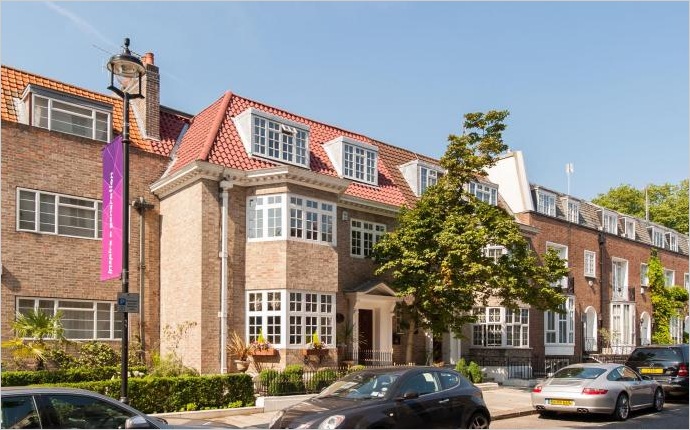
Central London Property Boom Continues

Anyone searching for properties for sale in Central London will find that the list of homes available is falling, as a growing number of investors snap up rental investments in the capital. What’s more, the number of homes on the market that have had their asking price reduced at least once has fallen to its lowest level since late 2010 as confidence returns to the housing market, according to the latest research from property website Zoopla.co.uk.


The proportion of properties currently on the market with a reduced asking price now stands at 31.5 per cent, compared to 36.7 per cent a year ago. This suggests that fewer sellers are feeling pressured to cut their asking price in order to achieve a sale. This is particularly the case as far as houses and flats for sale in central London are concerned, with demand from investors soaring. 


Lawrence Hall of Zoopla.co.uk comments: "The number of price-reduced properties has fallen to its lowest since early 2010 indicating growing confidence in the market"

With residential property market conditions in London rapidly improving, more investors are actively looking to either enter the buy-to-let market or add to their existing property portfolios, in order to take advantage of the rise in the number of people looking for houses and flats to rent in central London.

The first ever Sequence lettings index shows that the number of new applicants registering with the company in order to rent a home in March increased by 21 per cent compared to the previous month, while the volume of properties to rent only increased by five per cent during the same period.

Stephen Nation, Head of Lettings at Sequence, commented: "We have seen a strong seasonal uplift in demand for rented accommodation with over 12% growth in the number of new tenant applicants, viewings and agreed tenancies."

He added: "Monthly Rents of £1,375 in London remain almost double the national average of £704."

Aside from solid rental returns, many property investors also want to take advantage of rapidly increasing home values in the capital, particularly in prime central London, where prices are appreciating by an average of £383 per day, according to Marsh & Parsonsin its Residential Investment Monitor Q1 2013.

Following a slowdown in both the sales and lettings markets during the fourth quarter of last year, the property firm report that the prime central London residential market has turned a corner, with positive growth recorded across all London regions, led by gains in prime central London.

Data provided by Marsh & Parsons shows that the average price of a flat in prime central London breached the £1 million mark for the first time, while the average price for prime residential property as a whole reached a new historic high of £1.53 million in Q1, leaving prices 6.1% above the previous market peak of Q3 2007. This translates to an average increase of £383 per day.

"Prime Central London is once again experiencing robust price growth, driven primarily by the supply drought and strong domestic demand, aided by a greater take up of the historically low mortgage rates," said Sue Foxley, Head of Research at Cluttons.

Moving forward, the housing market in prime central London, having successfully withstood the worst of the economic turbulence, is expected to experience further robust price growth, driven primarily by the shortage of homes on the market and historically low mortgage rates.

"Prime central London property is largely immune from short term fluctuations," said Andrew Ellinas of leading estate agents Sandfords. "The main reason is that a property in London has intrinsic value that is not dependent on buyer sentiment but its use as a place to live and do business in the most vibrant and cosmopolitan city in the world."

Some leading property experts expect to see home values in prime central London increase by in excess of 20 per cent over the next five years, and very few people would argue against that forecast.

Sunday, 28 April 2013

Fierce Competition Sees Rents Soar In Central London

Rents have continued to soar in the capital's most desirable areas, fuelled by growing demand for properties to rent in central London, owed in part to a high level of fierce competition from frustrated would-be home buyers struggling to gain a foot on the housing ladder.

The typical rent in London rose by 6.2 per cent in February compared with a year earlier, according to the data from lettings network LSL Property Services - which owns chains such as Your Move and Reeds Rains.

The hike in rental values is largely due to the lack of homes on the market in relation to demand.

LSL director David Newnes said: "In the longer-term, the supply of rental homes will have to increase considerably to prevent monthly rent rises when the rental market re-enters its traditional peak season."

The property shortage in the rental market is owed mainly to a lack of house building, while many foreigners, who make up a significant share of those buyers taking advantage of attractive flats and houses for sale in central London, generally opt not to rent their homes out. 


"Wealthy foreign buyers who own properties in these areas [central London] rarely rent them out. This has cut the pool of homes available to renters and contributed to sharp rental prices increases," said Ludlow Thompson director Stephen Ludlow.

New research by Ludlow Thompson shows that the average cost of primarily located flats and houses to rent in central London has now soared past the £5,000 per month mark.

                          
New data published by Ludlow Thompson reveals that rents in SW1, which includes the elite enclaves of Belgravia and Knightsbridge, are the highest, averaging £6,171 a month. This is followed by W1, which covers Mayfair, Marylebone and Soho, where rents are £5,493, while rents in Chelsea, SW3, have reached £5,442.

The success of the prime central London property market over the last five years is creating plenty of fresh buy-to-let investment opportunities, according to leading estate agents Sandfords.

The company is bullish on the private rented sector, pointing to the latest census figures that show the rising generation is moving to city centres to live.

"They [people] cannot afford to buy and are increasingly deciding to rent long-term," said Sandfords Director, Andrew Ellinas.

He added: "The predicted capital growth in prime central London combined with the rental growth caused by the high demand and relatively low supply is a clear investment opportunity."

The success of the housing market in central London is likely to have a positive knock-on effect on the wider property market in the capital, particularly in those secondary areas on the edge of central London, such as St John's Wood, Regent's Park and Primrose Hill.

Brendan Cox, Managing Director of Waterfords estate agents, commented: "There is no doubt that London has to be one of the top investment destinations for anyone looking for a safe-haven asset right now."

As rents soar and deposits to buy property become even further out of reach, the government needs to look seriously at how it can help more people buy property in central London, such as make housing more affordable. In the meantime, landlords will continue to reap the rewards of existing market conditions.

Friday, 12 April 2013

Golden opportunity to invest in property

With more people now disillusioned with pensions, stocks and shares often fluctuating like a very big rollercoaster, with more downs than ups in recent years, and savers receiving dismally low returns from banks and building societies, more people have opted to invest in gold in recent years, which has been regarded as a safe place to preserve wealth. But this could be changing, according to leading Maida Vale estate agentsSandfords. 


Andrew Ellinas, Director of Sandfords, which also has offices in Marylebone, Regent’s Park and Primrose Hill, points to the fact that over the last year, the value of gold has fallen by 2.3 per cent. In stark contrast, the value of property in prime central London continues to rise.
 
With the supply of properties for sale in Fitzrovia, Mayfair, Knightsbridge, among other prime London districts continuing to fall short of demand, the price of London’s best residential properties has increased for an unprecedented ten quarters in a row, the latest figures from Savills show. 


The estate agent’s prime London index, which covers homes with an average price of £3.5 million, shows that the average price of a home in this price bracket has increased by 17.6 per cent since the end of 2010.
 
Yolande Barnes, Savills Director, said: “In historic terms, this rate of growth looks steady for a prime residential market and much less volatile than some other prime world markets. It flies in the face of those who claim the market is overheating.”
 
The housing market in prime London has been supported by an influx of foreign buyers, due to the weak pound and the eurozone crisis. This has largely offset the impact of the Chancellor’s stamp duty raid on £2 million-plus homes last year.
 
Dominic Agace, CEO of Winkworth, commented: “Winkworth’s central London offices have for some time been experiencing growing interest in prime London properties from international buyers. With a favourable geographic location between the U.S. and Far Eastern time zones, and a track record as a safe investment market, demand will always be high.”

A glance at the market in prime central London suggests that a mini boom is occurring which could eventually benefit homeowners across the capital and beyond.
 
Property prices across much of North West London, for instance, are catching up with central London as investors look for property investment opportunities outside of central London.


Many landlords are opting to take advantage of high demand among tenants for attractive properties to rent in St. John's wood, Primrose Hill, Swiss Cottage, among other surrounding areas. 

David Brown, Commercial Director of LSL Property Services, said: “As long as rents remain close to last year’s record highs there’s a strong incentive for landlords to invest in the private rented sector.”
 

With a growing number of people struggling to get a foot on the housing ladder, demand for rented accommodation is likely to grow further, with the hike in the volume of people searching for rental properties likely to create plenty of fresh buy-to-let opportunities for landlords.

Friday, 5 April 2013

More Properties for sale in North West London Needed

Theon-going shortage of residential properties in prime central London in relation to record high demand, fuelled by a flurry of international buyers, is continuing to push property prices higher. The latest Knight Frank Market Update shows that the  average price of a home in the heart of the capital increased by 0.9 per cent in January, compared to just 0.2 per cent across the UK as a whole, taking the annual rise in prime central London to 8.4 per cent.

Demand for residential properties in central London has been boosted in recent months by the draft Finance Bill which gave some clarification on the ARPT, which helped offset the downturn in sales witnessed for much of last year.

The weak pound, solid rental returns and good prospect for capital growth have also helped to boost demand, particularly among foreign buyers.
Peter Rollings, CEOMarsh & Parsons, commented: "The relative shortage of stock sees house prices in the capital setting new records according to Nationwide. Demand is coming from both home and abroad and is set to continue with the much anticipated return to more seasonable Spring-like weather."

This strong demand in central London is expected to ripple out to other parts of London, especially in North West London, where some of the most desirable districts in the capital are situated. The concern is that there are simply not enough properties for sale in North West London, due to a general housing shortage. 


Andrew Ellinas, Director of Sandfords, said: "The success of the prime central London property market over the last five years is creating a wave of price rises in nearby areas as people move further afield in search of value." 


Ellinas reports that there is a particular shortage of properties for sale in St. John's wood, Primrose Hill and Maida Vale, traditionally regarded as outside the prime central London zone.

"These areas are now developing into an 'outer prime London' market," he added.

Strong prospects for capital growth is an attractive proposition for property investors, but it is the lure of solid rental returns that far outstrip low saving interest rates, which ultimately appeals to investors, thanks to strong demand for properties to rent in North West London


David Whittaker, managing director at Mortgages for Business, said: "Tenant demand for residential property is ballooning thanks to the lack of mortgages available to first-time buyers. Every month more and more would-be buyers are being forced to rent, and this is pushing up demand to astronomical levels, producing very attractive gross yields for landlords as a result."

In fact, 61 per cent of private and social housing tenants in England do not believe that they will ever be able to purchase a home, mainly due to affordability constraints, according to Castle Trust.

Sean Oldfield, chief executive officer, Castle Trust, said: "Many people are either unable to get on the property ladder or stuck in their current home despite interest rates still being at an all-time low. Schemes like the Government's Funding for Lending are helping to boost borrowing options but the market still needs innovative lending products."

Castle Trust's analysis shows that owner occupation in England has fallen by 200,000 from 14.6 m in 2008 to 14.4m in 2012. Its data also indicates that there has been an increase of 23 per cent in the number of people who are choosing to rent in the private sector, with 3.1 million renters in 2008 rising to 3.8m renters in 2012; the rise in rental demand is a highly attractive proposition to buy-to-let investors.

Thursday, 21 March 2013

Investors Taking Advantage Of Greater Demand For Rental Properties In Central London


With tenants paying an average of £64 a month more than they were last year to rent property in the capital, investors have moved swiftly to cater for growing rental demand, particularly in central London.

With more tenants competing for properties to rent in Fitzrovia, Mayfair, Marylebone, St John’s Wood, among other highly desirable areas, rents in London have increased significantly over the past year.  


The LSL Property Services’ monthly Buy-to-let index found that while average rents across England and Wales dipped by 0.1 per cent in February, reaching £731 a month, rates in the capital rose by 0.5 per cent to£1,092, from £1,086 in January.

The increase contrasts with a 0.2 per cent fall in rents last month and means rents in the capital have risen by an impressive 6.2 per cent annually, equivalent to £64 and well above the national average of 3.3 per cent.

David Newnes, Director of LSL Property Services, said: "While a modest increase in supply has had an effect, in the longer-term, the supply of rental homes will have to increase considerably to prevent monthly rent rises when the rental market re-enters its traditional peak season."

The hike in rental prices means that any decent houses or apartments for sale in central London are generally snapped up swiftly by property investors, particularly those specialising in acquiring buy-to-let units.

Rental demand for property in central London is being driven primarily by young professionals who prefer to rent as a lifestyle choice, while others simply cannot afford to get a foot on the housing ladder. Many former homeowners have also become renters since the housing collapse. They either want no part of owning or are forced into rental accommodation because they cannot qualify for mortgages.

AndrewEllinas, Director at Sandfords, commented: "Property economists are also bullish on the private rented sector, pointing to the latest census figures that show the rising generation is moving to city centres to live. They cannot afford to buy and are increasingly deciding to rent long-term."

While the cost of homeownership beats renting, investor demand for apartments and houses for sale in central London is driving up home prices.

Property prices are also being pushed higher by a lack of supply in relation to high demand, owed in part to stringent planning controls and the lack of land for residential development in central London.

Over the past five years the London property market has outperformed the national average, with property prices in the capital having risen by six per cent over the period compared with a decline of 11 per cent nationwide, according to the estate agents Knight Frank.

Capital gains in central London have been much higher: According to Knight Frank, property prices in London’s most expensive residential boroughs have soared over the past five years. Home prices in Kensington & Chelsea, for instance, have appreciated by 37 per cent over the past five years. The company points out that prices in such prime areas now show a closer correlation to prime regions in global cites such as New York or Hong Kong than to prices in Manchester, say.

Central London property prices are ultimately being pushed higher by greater demand from homebuyers, particularly international property purchasers who make up a significant share of all buyers.

Lindsay Cuthill of Savills told the press: "It is the strength of demand from overseas buyers that has driven up prices in central London boroughs and underpin this market."

It may not yet be full steam ahead for the national housing market, but the London property market continues to go from strength to strength; it truly is in a league of its own.

Thursday, 21 February 2013

High Buyer Demand On The Back Of Low Mortgage Rates


Many property experts project that residential prices in the capital will rise in the short to medium term, on the back of low mortgage borrowing rates and a rise in the number of international buyers looking to acquire property in London, widely considered to be the ultimate safe haven market.

Mortgage borrowing rates have fallen sharply in recent week, with some two-year fixed rate deals starting from as low as 1.99 per cent, on the back of the Bank of England's Funding for Lending Scheme, which was introduced last year.

There are growing signs that government efforts to boost mortgage lending are trickling down to people with smaller deposits, reflected by the fact that there has been a sharp rise in the number of first time buyers.

November's mortgage lending data from the Council of Mortgage Lenders (CML) shows that the volume of first-time buyers increased by 24 per cent year-on-year, with a total of 21,700 loans advanced to first-time buyers, worth £2.7 billion, in November, marking one of the highest monthly totals seen in the past three years.

For the second consecutive month, first-time buyer loans accounted for 41 per cent of all home purchase loans, compared with the longer-term average of 38 per cent.

"Encouraging activity in the first-time buyer sector in November contributed to an uplift in house purchase lending, suggesting the underlying trend for year-on-year increases should continue," said Paul Smee, director-general a CML.


Attractively low mortgage borrowing rates has led to a rise in the number of homebuyers searching for a house or apartment for sale in Little Venice, St John's Wood, Primrose Hill, Marylebone, among a host of other desirable locations in the English capital.

"All these areas have seen surging prices over the last year," said Andrew Ellinas of leading estate agents Sandfords.

He added: "The best houses and apartments in these areas now represent a safe and secure place to store funds as well as a base in some of the loveliest areas in the most vibrant, cultured and cosmopolitan city on earth."

Whether talking to Mayfair estate agents or Marylebone estate agents, or any agent in a sought-after part of London for that matter, they will all agree that London is proving a wealth magnet thanks to its safe haven status.


London's political and relative economic stability has helped to attract a high number of overseas property investors in recent years, as they seek to preserve wealth in light of political, economic and financial upheaval in their home nations, helping to push property prices higher.

Yet, despite the surge in London property values, the weak pound, ironically, has actually made acquiring property in London relatively cheaper for some foreign buyers, particularly those from Asia.

Shirley Humphrey of Harrods Estates said: "The prime central London residential market is as popular as ever with international investors. While interest from Russian and Middle Eastern investors remains strong, increasingly, buyers from Hong Kong and Singapore are making a significant impact."

Wealthy overseas buyers generally look to buy property in some of London's most exclusive areas, which explains why so many look at property for sale in Fitzrovia, Chelsea, Mayfair, Hyde Park, among other desirable districts.

International purchasers, especially those from Asia, are particularly interested in acquiring new build homes in the capital.

Trish Henderson, Sales and Marketing Director, of Taylor Wimpey Central London, said: "Investors from the Far East, in particular Singapore and Hong Kong, have been key drivers in the prime London new build residential market. These buyers are looking for solid investment properties, but more and more, properties in areas that offer a great range of lifestyle and education options for their families.

As we start the new year confidence to the residential property market appears to be improving, helped in part by low mortgage rates. Many housing experts predict that transaction levels will continue to increase in many parts of the country and this in turn could lead to significant capital growth.